
ISO/IEC 17025:2017 calibration + biological testing · Valid through 2027
ISO/IEC 17025 is the foundation. Every framework above it recognizes it.
ISO/IEC 17025:2017 — General Requirements for the Competence of Testing and Calibration Laboratories — is the international standard that defines what a competent laboratory looks like. Method validation, personnel competency, measurement traceability, measurement uncertainty, quality management systems, deviations and corrective actions, management review. Every clause is a question an inspector or auditor might ask. Every clause is something an accredited laboratory can answer in writing.
That's why FDA cGMP, USP <797>, ISO 9001, IATF 16949, AS9100, API standards, and Joint Commission medication management all recognize ISO/IEC 17025-accredited calibration and testing as satisfying their respective audit requirements. One accreditation, multiple framework recognition.
"Laboratories shall plan and implement actions to address risks and opportunities. Addressing both risks and opportunities establishes a basis for increasing the effectiveness of the management system, achieving improved results, and preventing negative effects."
— ISO/IEC 17025:2017, Clause 8.5
What Allometrics' ISO/IEC 17025 accreditation covers
Calibration — A2LA Cert 2039.01
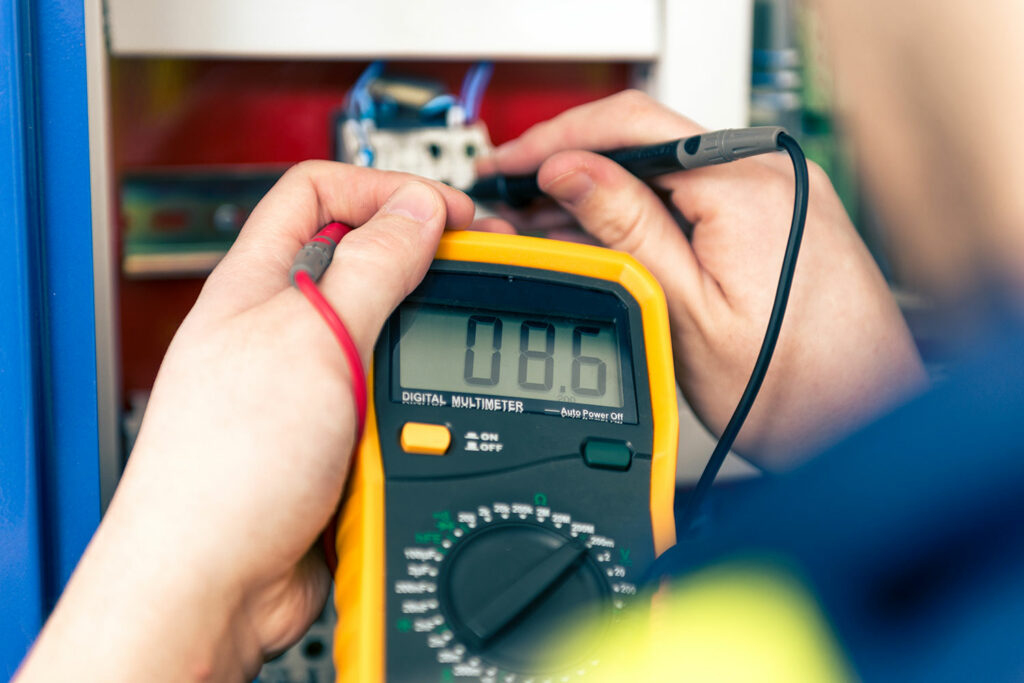
Mass and weight, dimensional, pressure, temperature, electrical, volumetric, and environmental calibration. Valid through April 30, 2027. Recognized by:
- FDA 21 CFR 211.68 (cGMP equipment calibration)
- USP <797> equipment calibration requirements
- ISO 9001 measurement traceability requirements (Clause 7.1.5.2)
- IATF 16949 supplier audits
- AS9100 quality system requirements
- API inspection standards
- Joint Commission medication management (where calibration applies)
- ASCLD/LAB and similar forensic laboratory frameworks
Biological testing — A2LA Cert 7533.01 (Taylor Lake Laboratories)
Microbial enumeration, microbial identification (microscopy and biochemical), media fill kit analysis per USP <797>. Valid through September 30, 2027. One of the few labs in the nation with A2LA accreditation specifically for environmental monitoring. Recognized by:
- USP <797>/<800>/<825> environmental monitoring requirements
- FDA cGMP environmental monitoring under 21 CFR 211
- The Joint Commission Medication Management chapter
- FDA 21 CFR 1271 (HCT/Ps — for cell and gene therapy)
- BSL-2 / BSL-3 biosafety surveillance
The ISO/IEC 17025 services map
| Service | What it covers | Spoke page |
|---|---|---|
| Calibration (broad routing) | Mass, dimensional, pressure, temperature, electrical, volumetric, environmental — all under A2LA Cert 2039.01. | Calibration hub → |
| Calibration (cGMP / pharma) | Audience-tailored cross-cut for pharmaceutical compounding, hospital pharmacy, 503B outsourcing, cGMP manufacturing. | cGMP / pharma → |
| Calibration (industrial) | Audience-tailored cross-cut for industrial, chemical, oil & gas, manufacturing, automotive supplier. ISO 9001, IATF 16949, AS9100, API. | Industrial cross-cut → |
| Discipline pages (15) | Mass, temperature, volume, pressure, mechanical, analytical, flow, electrical, dimensional, mapping, humidity, force/torque, time/frequency, optical — deep-dive page per metrology discipline. | Discipline hub → |
| Biological testing (Taylor Lake Laboratories) | A2LA Cert 7533.01 microbial enumeration, identification, media fill analysis. | Microbial testing → · taylorlakelabs.com |

What ISO/IEC 17025 actually requires of an accredited laboratory
The standard's structure maps directly to what auditors and regulators ask:
| Inspector / auditor question | ISO/IEC 17025 clause |
|---|---|
| Is the laboratory impartial? | Clause 4 |
| Are the personnel competent? | Clause 6.2 |
| Is the equipment calibrated and traceable? | Clause 6.4 |
| Are the methods validated? | Clause 7.2 |
| Is there documented chain of custody? | Clause 7.4 |
| Is there a sampling and reporting protocol? | Clause 7.3, 7.8 |
| Is there a quality management system? | Clause 8 |
| Are deviations investigated and corrected? | Clause 8.7 |
A laboratory accredited under ISO/IEC 17025 produces documentation against each clause as part of routine operation. A laboratory not accredited under ISO/IEC 17025 may have all the technical capability but lacks the structural framework that produces inspection-defensible documentation.
Why ISO/IEC 17025 accreditation matters at the source
Many laboratories claim "ISO/IEC 17025 compliant" without holding the accreditation. The distinction matters under audit. Compliant means the laboratory says it operates that way. Accredited means a third-party assessment body — A2LA, in Allometrics' case — has verified it under documented scope and continues to verify it through periodic surveillance audits.
A2LA Cert 2039.01 and A2LA Cert 7533.01 are both A2LA-accredited certifications with specific documented scopes. The cert numbers, scopes, and expiration dates are publicly verifiable through A2LA's directory. An auditor reviewing documentation from Allometrics or Taylor Lake Laboratories can confirm the accreditation independently in seconds.
That verifiability is the moat. Many calibration vendors claim accreditation. Few hold the documented, scope-specific A2LA accreditation that lets the auditor confirm independently.
Audit-time guarantee. If an Allometrics calibration certificate is challenged in an FDA, USP, Joint Commission, CAP/CLIA, ISO 9001, IATF, AS, API, or customer audit, we will address it.