
ISO/IEC 17025:2017 calibration · Valid through April 30, 2027
This isn't an instrument calibration. The deliverable is the qualification report.
Most calibration vendors wedge mapping into the same line item as instrument cal. It isn't the same service. Mapping is a spatial-and-temporal study of a controlled environment that proves the space holds its setpoint everywhere it's supposed to, all the time it's supposed to. The output isn't a calibration certificate. It's an IQ/OQ/PQ qualification report — installation qualification, operational qualification, performance qualification — formatted for FDA cGMP, USP <797>, USP <1079>, ISPE, Joint Commission, or your customer's specific QMS template.
What that means in practice:
- Multiple NIST-traceable probes deployed simultaneously — typically 9, 12, 18, or 36 depending on the volume and the regulatory framework — not a single thermometer reading.
- Continuous data over an extended logging window — 24 hours minimum for most studies, 7 days for pharmaceutical warehouses, multi-cycle for autoclave heat distribution.
- Three states verified for chambers — empty, loaded, and worst-case operational (door open / power loss / compressor cycle), depending on the protocol.
- Mean kinetic temperature (MKT) calculation when the regulatory framework calls for it — pharmaceutical stability, vaccine cold-chain, biologics distribution.
- A signed, formatted qualification report — protocol, raw data, summary statistics, deviations, conclusions, and the regulatory framework cited up front.
If your auditor opens an instrument cal certificate when they ask for a mapping report, you have a finding before you have a discussion. We deliver the right document.
What probe density and placement actually look like in your space
An honest mapping protocol starts with two things most quotes leave out: how many probes and where they go. Done badly, those decisions are how a passing report still fails an audit.
Typical probe counts by space.
- Bench refrigerator / under-counter freezer — 5 to 9 probes (corners, center, door-side worst case)
- Walk-in cooler / walk-in freezer — 9 to 18 probes distributed by volume; door-corner included as a worst-case position
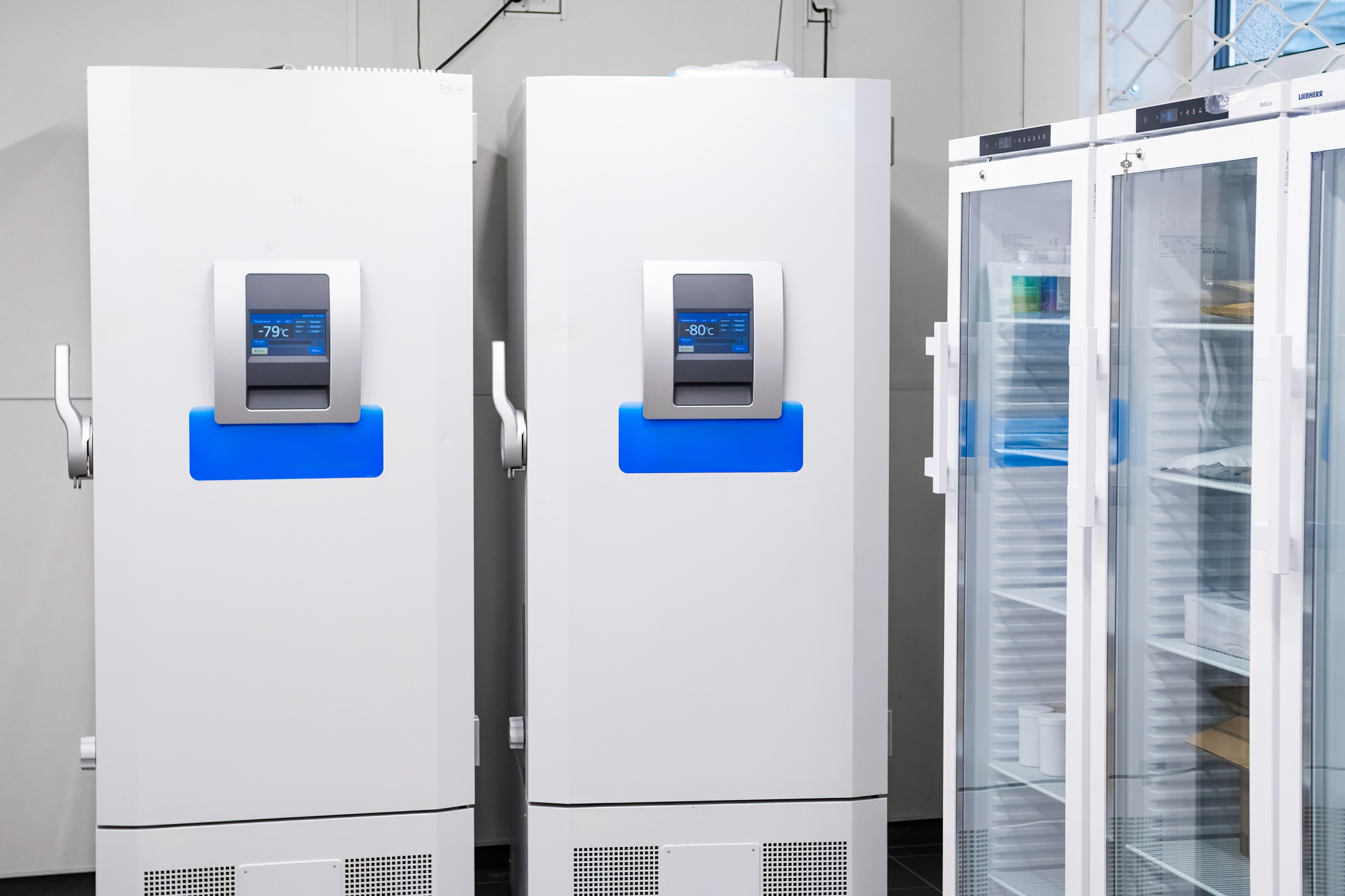
- ULT freezer (−80 °C) — 9 to 12 probes across rack positions, typically with a load study using surrogate vials and an MKT analysis
- Stability chamber — 9 to 12 probes plus separate humidity logging when controlled to %RH; multi-cycle PQ
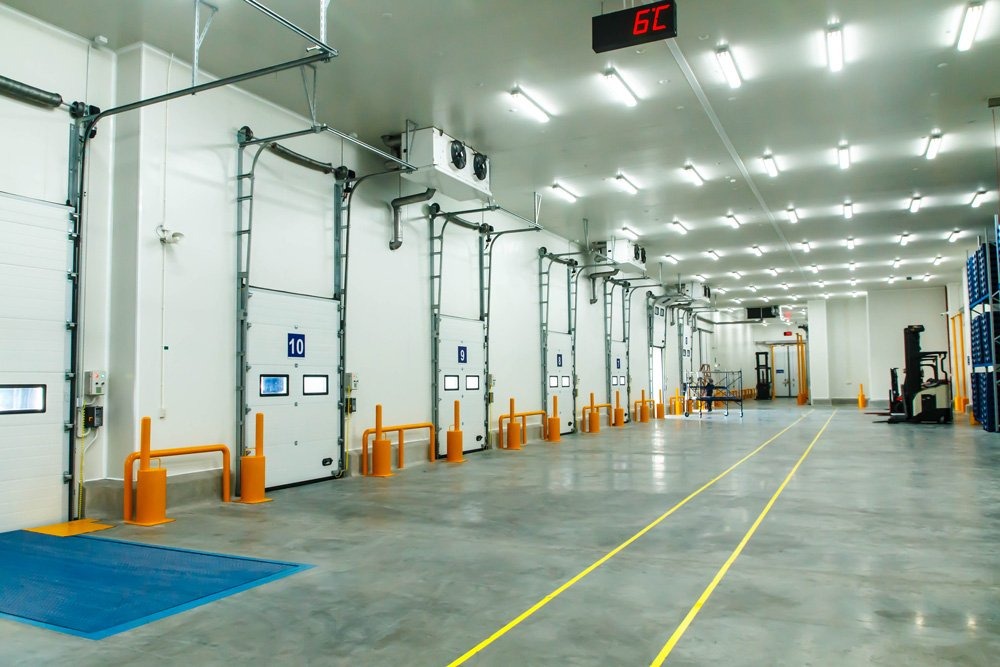
- Pharmaceutical warehouse / cold-chain DC — 18+ probes minimum, distributed over the volume per ISPE Good Practice for Controlled Temperature Storage; door, dock, aisle, and rack positions all sampled
- Pharmacy storage room / USP <797> ante / buffer / SCA — combination of fixed wall-mounted and free-air points; humidity logged per the chapter
- CO₂ incubator — temp + humidity + CO₂ where the customer has enabled probe access ports; door-open recovery cycle included
- Autoclave / sterilizer — heat-distribution probes for empty-chamber qualification plus heat-penetration probes inside representative loads
Sampling interval. Default is 1-minute intervals; tighter intervals are used when the protocol needs to catch a defrost cycle or a door-open recovery curve. A logger snapshot at 15-minute intervals can mask the worst minute of the day — we don't run that interval on regulated work without explicit customer instruction.
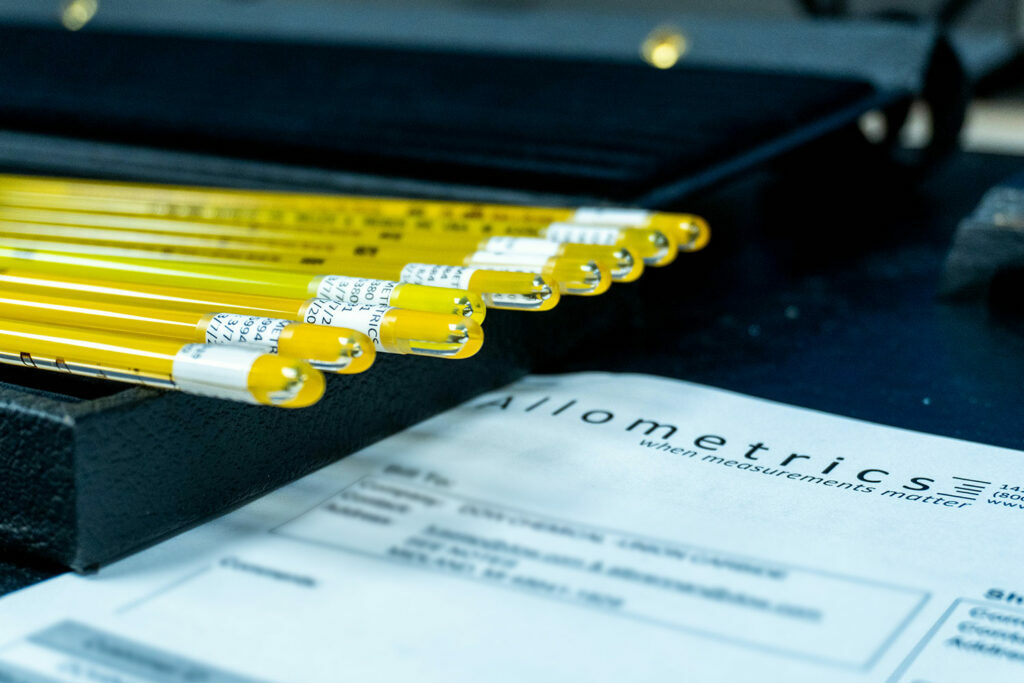
Datalogger fleet. NIST-traceable Vaisala, Kaye, and MadgeTech logger sets (including MadgeTech cloud-monitored deployments where the customer wants ongoing visibility into the space). Probes are individually calibrated and labeled in our Mass / Dimensional / Temperature lab before deployment, and re-verified after the study against the same reference standards.
What gets mapped — and what each space has to prove
Mapping isn't one service. It's a different deliverable for each kind of space, because each one is answering a different audit question.
- Refrigerators & under-counter freezers — uniformity at 2–8 °C and door-side recovery time. Common for vaccine storage (CDC VFC), blood bank, hospital pharmacy, biorepository.
- Walk-in coolers & walk-in freezers — corner-to-corner uniformity in the loaded state, door-open recovery, and behavior during a defrost cycle. Auditors want proof the rear corner doesn't drift.
- ULT freezers (−80 °C) — rack-position uniformity plus an MKT calculation across the logged window. Critical for biologics, cell & gene therapy material, biobank inventory.
- Stability chambers — multi-cycle PQ proving setpoint and humidity hold across the chamber load over multiple operational cycles. Required for pharmaceutical stability programs.
- Pharmaceutical warehouses & cold-chain DCs — distributed mapping across the volume per ISPE Good Practice and WHO TRS 992 (where applicable), with door, dock, aisle, and rack positions all represented. The deliverable usually includes a heat-load summer/winter comparison.
- Pharmacy storage rooms & USP <797> cleanrooms — ambient temp and humidity verified against the chapter's published limits, with deviations and trends documented for the QMS file.
- CO₂ incubators — temperature, humidity, and CO₂ at the operating envelope, including a door-open recovery cycle (the case where most incubators show the largest deviation).
- Autoclaves & sterilizers — heat distribution in the empty chamber and heat penetration inside representative load configurations, with biological indicator placement coordination on request.
- Cold-chain shipping qualification — packaging shipper validation for biologics and pharmaceuticals including dry-ice and gel-pack systems, summer / winter ambient profiles, and route-time scenarios.
- Process equipment — ovens, dry-blocks, water baths, autoclaves — for QC labs and manufacturing where heat distribution affects product quality.
Brands and logger systems we routinely deploy: Vaisala (RFL100, HMP-series, viewLinc), Kaye (ValProbe, RF ValProbe RT), MadgeTech (cloud-monitored), Onset HOBO, Thermo Fisher Scientific. We map all spaces regardless of the installed customer monitoring system — and integrate with your existing EMS where one exists.

What's actually in a 24-hour mapping qualification
The quote line for "Freezer/Fridge 24-Hour Temp Mapping / Qualification" on a typical hospital pricing sheet runs in the low four figures per unit. That's not a black box. Here's what's in it:
- Pre-deployment probe calibration — every probe used in the study is verified against NIST-traceable reference standards in the cal lab before it leaves the building.
- Onsite deployment — corner, edge, center, and worst-case-position probe placement per the protocol, with placement documented (photos and a labeled diagram in the report).
- 24-hour minimum logging window — capturing at least one full operational cycle including any scheduled defrost, door-access pattern, and steady-state period.
- Post-deployment probe re-verification — confirming the probes were within tolerance for the whole logging window.
- Statistical summary — min, max, mean, MKT (where applicable), and uniformity range across the probe set.
- Deviations identified and explained — every excursion above or below the spec gets a position, a duration, and a likely cause noted.
- Formatted qualification report — IQ/OQ/PQ structure aligned to USP <1079> (good storage and distribution practices), USP <1058> (analytical instrument qualification, where mapping touches instrumentation), USP <797> (pharmacy compounding), ISPE Good Practice for Controlled Temperature Storage, or your QMS-specific template.
- Recurrence guidance — when this needs to be repeated, what triggers an early remap, and how to file the report into your QMS.
For warehouses, ULTs, and stability chambers the price scales with probe count, deployment time, and report complexity — but the structure of the deliverable is the same.
Recurrence — when you have to remap, even if nothing changed
The most common audit finding for mapping programs isn't the original report. It's the absence of a current one. So here's the recurrence framework we put in writing for every customer:
Annual recurrence at minimum. Most regulated customers map every space on an annual cadence, even when no change has occurred. This is the floor for FDA cGMP, USP <1079>, USP <797>, and Joint Commission medication-management programs.
Change-driven remaps. Any of these triggers a remap before the next annual cycle:
- Door, gasket, or seal replacement
- Compressor or condenser swap
- Rack reconfiguration or significant load change
- Setpoint change
- HVAC seasonal rebalance for the room (relevant for pharmaceutical warehouses)
- EMS sensor replacement or recalibration discrepancy
- Excursion event with corrective action that changes the space
Coordinated with our temperature instrument calibration program. The probes used in your mapping are the same probes (or equivalent) that we calibrate in the temperature instrument program. Customers on a recurring program get probe and chamber work coordinated under one number, one schedule, one accreditation chain — so the underlying instrumentation is always in cal at remap time.
Audit-time guarantee. If a mapping qualification report we delivered is challenged in an FDA, USP, Joint Commission, CAP/CLIA, ISO 9001, or customer audit, we will address it. Records managed in IndySoft — 21 CFR Part 11–compliant electronic records, validated audit trails, controlled access.
A2LA Cert 2039.01 — reference equipment used in mapping
The full A2LA scope is published at a2la.org/accreditation/2039-01. Mapping itself is a service deliverable rather than a single A2LA-scoped instrument cal — but the reference equipment we use to qualify the dataloggers and probes deployed in your space is calibrated under our published scope:
Download the full A2LA Cert 2039.01 Scope of AccreditationView the temperature & humidity reference scope (verbatim from the published cert)
| Parameter/Equipment | Range | CMC2, 5, 7 (±) | Comments |
|---|---|---|---|
| Temperature3 – Measuring Equipment | (-200 to 115) °C (-328 to 239) °F (116 to 300) °C (240 to 572) °F (301 to 650) °C (573 to 1202) °F (650 to 1000) °C (1201 to 1832) °F | 0.032 °C (32 mK) 0.058 °F 0.047 °C (47 mK) 0.085 °F 0.076 °C (76 mK) 0.14 °F 0.085 °C (85 mK) 0.15 °F | PRT and indicator |
| IR Thermometer | (0 to <50) °C (50 to 500) °C | 0.35 °C (0.11 % + 0.75) °C | Environmental chamber w/ PRT Fluke 9132 |
| Humidity3 – Measure | (20 to 70) % RH | 2.1 % RH | Fluke 2626-S |