

ISO/IEC 17025:2017 calibration · Valid through April 30, 2027

Full ASTM D1238 — start to finish
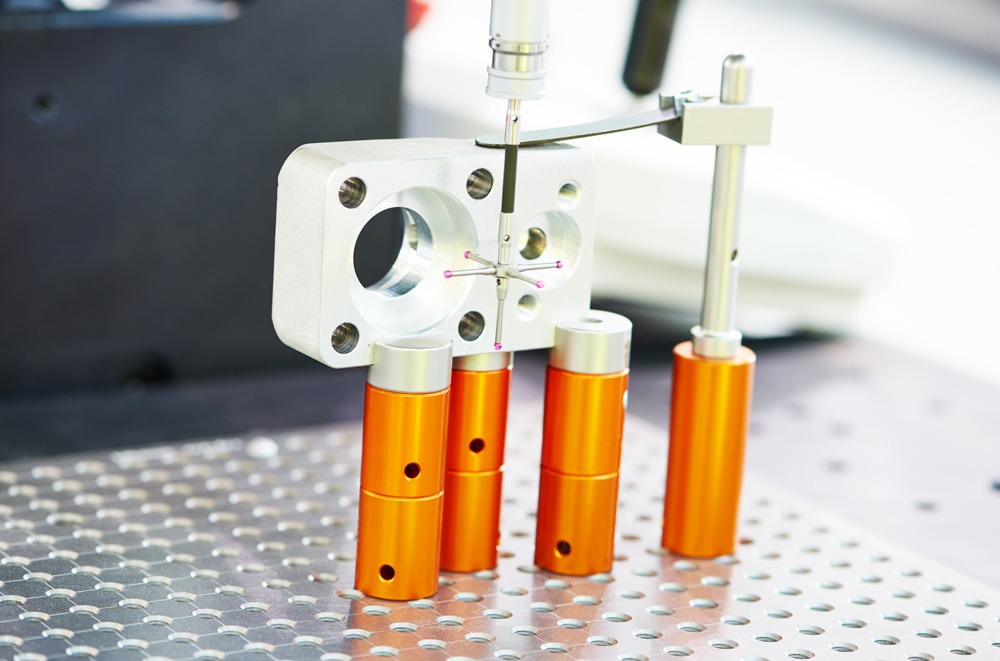
Most calibration labs that "do plastometers" verify the temperature and the load, then call it done. They don't measure the cylinder bore. They don't measure the die diameter. They don't verify the piston rod. They don't certify the land length. ASTM D1238 calls for all of it, and an inspector who actually knows the standard will ask for the documentation.
Allometrics does the full ASTM D1238. Our published A2LA scope under Cert 2039.01 covers extrusion plastometer cylinder bore (up to 10 mm, 5.8 µm CMC), die diameter (up to 10 mm, 0.64 to 3.7 µm CMC), piston rod and land diameter, land length, thermal verification (116 to 650 °C), and load verification (100 g to 31.6 kg, 0.1% of nominal). Performed per Allometrics laboratory procedure 5-4WI05. Plant-floor or in our cal lab — your call.
This is the work that customers like Solugen, Braskem (Seadrift, Oyster Creek), Kaneka (Pasadena), and the broader polymer QC base in the Texas / Louisiana petrochem corridor turn to us for. If your QC department is failing internal audits because nobody can produce a full plastometer dimensional certificate — this is the page that solves it.
Plastometers we routinely calibrate: Dynisco LMI5000, Tinius Olsen MP1200/MP600, Ceast 7027, and equivalents.
Beyond plastometers — the rest of the polymer QA bench
The plastometer is the marquee instrument, but a polymer plant or specialty-chemical QC lab runs a much broader mechanical inventory. Allometrics calibrates the full bench:
Hardness
Wilson, Clark, Tinius Olsen Rockwell hardness testers with traceable Rockwell A/B/C reference test blocks · Tinius Olsen Brinell hardness scopes with stage-micrometer dimensional verification (the work that most generalist cal labs cannot deliver) · Vickers with traceable test blocks · Shore durometers calibrated against NIST-traceable references. Per ASTM E18, E10, E92, D2240.
Tensile, compression, peel, Vicat / HDT
Instron 3366, 5566R, 60K-class tensile testers for displacement, force, and speed verification per ASTM E4 / E2658 · Tinius Olsen Vicat and HDT-DTUL testers · peel testers, compression interfaces, load cells (100K compression-class) · Barcol Impressor (GYZJ 934). The work for Braskem Seadrift, Braskem Oyster Creek, Kaneka Pasadena, FlexSteel, and Pratt & Whitney suppliers.
Viscosity for petrochem and drilling fluids
Brookfield LVT and DV-series viscometers · Chandler 3500 / 3530 rheometers · Fann 35 drilling-fluids viscometers · Brookfield AMETEK / Barcol · capillary and inline viscometers. Calibrated against NIST-traceable Certified Reference Material viscosity fluids (50 cP through 200 cP and beyond) and customer-specified test points.
Force, torque, dimensional QA
Reference load cells, force gauges, dead-load test fixtures per ASTM E74 · torque wrench and torque screwdriver programs across MRO inventories — Sturtevant Richmont, Tohnichi, Snap-on, Proto, Gearwrench, Tekton, CDI · 0.5 N·m through 200 lbf·in and beyond. Aerospace MRO programs (Million Air-class, Pratt & Whitney suppliers, Intuitive Machines, Venus Aerospace) coordinate with us for managed multi-instrument fleets.
One field crew. One A2LA accreditation chain. One certificate package per visit.
How we work with refineries and polymer plants
Industrial mechanical calibration isn't just about reference standards — it's about how the work fits into a plant's operational reality. The differences from a typical lab calibration:
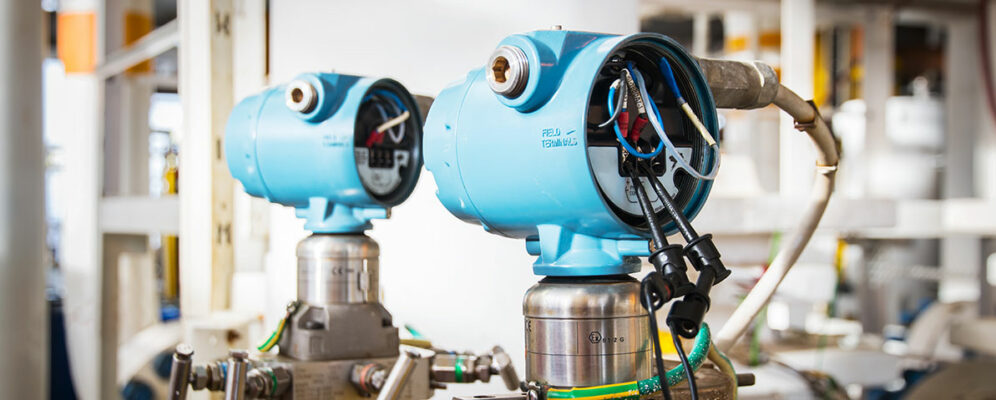
Onsite at production volume. Field metrologists arrive with calibrated reference weights, dimensional standards, dial indicators, hardness reference blocks, viscosity CRMs, and the full bench setup to verify melt flow indexers, hardness testers, tensile testers, viscometers, and torque tools in place. Plastometers don't move. Tensile testers don't move. We work around your production schedule, not the other way around.
Refinery turnaround coordination. Hot-work permits, classified-area entry, intrinsically-safe equipment use, lockout/tagout, lift gear for floor-mounted equipment. We've coordinated mechanical cal work into refinery turnaround windows for petrochem operators across the Texas / Louisiana corridor.
Multi-site fleet programs. Pickup/return logistics for torque tool inventories across MRO programs. Calibration-due reminders managed in IndySoft (21 CFR Part 11–compliant). Consolidated certificate package per fleet, per program cycle.
Webster, TX cal lab — for the work that benefits from a controlled environment: high-precision dimensional verification on plastometer components, full-overhaul work on hardness reference blocks, viscosity CRM cross-checks, and ultra-precision force / load cell verification.

What goes wrong without us
Industrial mechanical equipment fails quietly. The most common patterns we walk into when a polymer or petrochem customer switches from a generalist vendor:
1. Plastometer dimensional drift that invalidates the QC release. A melt flow indexer is verified at temperature and load only. The cylinder bore wears 50 µm and the die diameter wears 30 µm over a year of production runs. The melt flow numbers shift, the polymer release decisions shift, and the customer complaints land months later. ASTM D1238 expects the dimensional verification. If it wasn't done, the QC release isn't defensible.
2. Hardness tester passing material that should fail. A Rockwell tester drifts 2 HRC over its calibration interval. Incoming material that should be rejected for hardness gets accepted. The downstream forming process makes parts that meet drawings but fail under load. The root cause is a hardness tester that nobody re-verified against test blocks.
3. Viscometer drift in drilling fluids QC. A Fann 35 or Chandler rheometer drifts on rotor speed or viscosity-fluid temperature compensation. Drilling-mud yield-point and gel-strength readings come back consistent — consistently wrong. The mud engineer makes additive decisions based on the readings, the well costs go up, and the root cause is a viscometer nobody recalibrated.
4. Torque programs where nobody verifies between calibrations. An aerospace MRO torque wrench inventory goes through annual cal. Between calibrations, an over-torque event compromises an in-service tool. Without a managed program with documented in-between checks, the next assembly inherits the error.
Allometrics' certificates address all four. We measure what ASTM and the OEM specs actually call for, document the test conditions, calculate measurement uncertainty per ILAC P14 / GUM, and our hardness work uses traceable test blocks per ASTM E18 / E10 / E92.
Three certification tiers — match the calibration to the audit
Traceable — NIST-traceable verification against OEM or customer tolerance. Certificate, equipment adjustment, PM check. For general shop-floor mechanical equipment outside a strict accreditation regime.
Traceable with Data — adds full as-found / as-left data, measurement uncertainty, environmental conditions, and ANSI/NCSL Z540.3 compliance. For ISO 9001 quality programs and aerospace MRO torque programs.
Accredited (ISO/IEC 17025 / A2LA Cert 2039.01) — full accredited calibration under our published mechanical scope, measurement uncertainty per ILAC P14 / GUM, A2LA accreditation symbol on the certificate. The default for plastometer dimensional certificates, ASTM D1238 release work, and customer-QMS work that requires the full A2LA chain.
Industries we calibrate industrial mechanical equipment for
Common questions
Do you do the full ASTM D1238 dimensional verification, not just temperature and load?
Yes. Cylinder bore, die diameter, piston rod, land diameter, land length, thermal profile (116 to 650 °C), and load (100 g to 31.6 kg, 0.1% of nominal) — all under our published A2LA scope, per Allometrics laboratory procedure 5-4WI05. Plant-floor or cal-lab. This is the work we get called in for when a generalist cal vendor's certificate doesn't survive an audit.
Do you handle hardness testers — Rockwell, Brinell, Vickers, durometer?
Yes. Rockwell A/B/C with traceable test blocks. Brinell with reference blocks plus stage-micrometer dimensional verification on the indenter scopes (Tinius Olsen scopes). Vickers with reference test blocks. Shore durometers calibrated against NIST-traceable references. Per ASTM E18, E10, E92, D2240. Onsite or in-lab.
Can you calibrate Brookfield viscometers and Fann/Chandler drilling-fluid viscometers?
Yes. Calibrated against NIST-traceable Certified Reference Material viscosity fluids (50 cP to 200 cP and beyond). Spindle and speed verification per OEM and ASTM specifications. Common service for Fann 35, Chandler 3500/3530, Brookfield LVT and DV series, and inline viscometer / rheometer installations in petrochem and drilling-fluids labs.
Do you handle torque tools — wrenches, screwdrivers, programs?
Yes. Torque wrench and torque screwdriver calibration is one of our highest-volume mechanical services — across aerospace MRO inventories, refinery turnaround tool kits, and manufacturing QA programs. Range covered: 0.5 N·m through 200 lbf·in and beyond, NIST-traceable or A2LA-accredited per CDI calibration system, with managed-program enrollment for multi-instrument inventories.
Can you work in classified areas / refinery turnarounds?
Yes. Field metrologists are trained for refinery hot-work permit logistics, classified-area entry, and intrinsically-safe equipment use. We coordinate with site safety and operations on entry, lockout/tagout, and turnaround timing.
What's your turnaround?
Standard cal-lab turnaround is 5 business days. Onsite scheduling typically lands within 24-48 hours of quote acceptance. Quotes turn around in 24 hours.
A2LA Cert 2039.01 — extrusion plastometer scope
The full Allometrics A2LA Cert 2039.01 scope is published at a2la.org/accreditation/2039-01.
Download the full A2LA Cert 2039.01 Scope of AccreditationView the extrusion plastometer scope (verbatim from the published cert)
| Parameter/Equipment | Range | CMC2 (±) | Comments |
|---|---|---|---|
| Extrusion Plastometers3 – Cylinder Bore Diameter | Up to 10 mm | 5.8 µm | Laboratory procedure Doc. No. 5-4WI05 |
| Extrusion Plastometers3 – Die Diameter | Up to 3 mm Up to 10 mm | 0.64 µm 3.7 µm | Laboratory procedure Doc. No. 5-4WI05 |
| Extrusion Plastometers3 – Piston Rod, Land Diameter, Land Length | Per ASTM D1238 dimensional spec | Per published cert | Laboratory procedure Doc. No. 5-4WI05 |
| Extrusion Plastometers3 – Temperature | (116 to 300) °C (301 to 650) °C | 0.047 °C (47 mK) 0.076 °C (76 mK) | Temperature verification |
| Extrusion Plastometers3 – Load | 100 g to 31.6 kg | 0.1 % of nominal value | Per ASTM D1238 |
Standards: ISO/IEC 17025 · ASTM D1238 (extrusion plastometers) · ASTM D2240 (durometer) · ASTM E18 (Rockwell) · ASTM E10 (Brinell) · ASTM E92 (Vickers) · ASTM E4 (force) · ASTM E2658 (speed) · ASTM E74 (force-measuring instruments) · per Allometrics 5-4WI05.