
ISO/IEC 17025:2017 calibration · Valid through April 30, 2027
The centrifuge program work that anchors a clinical lab
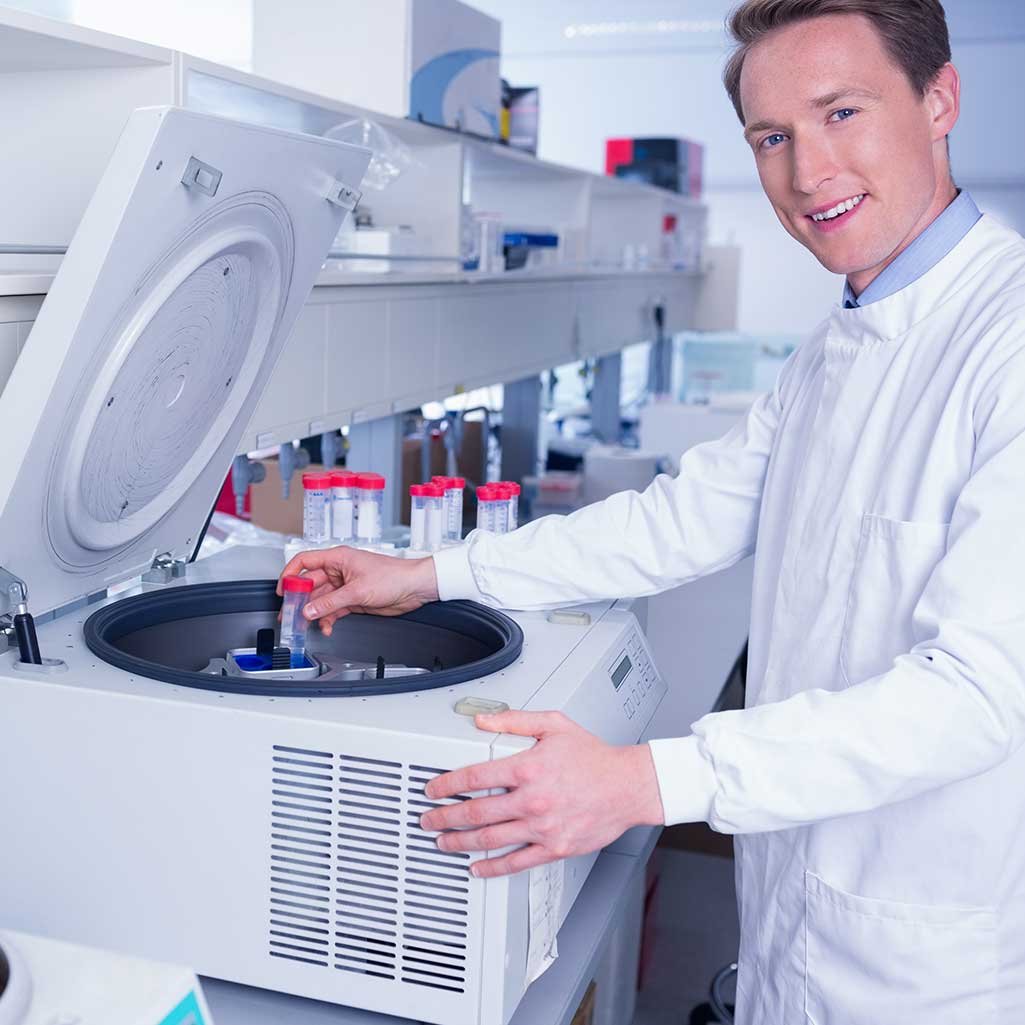
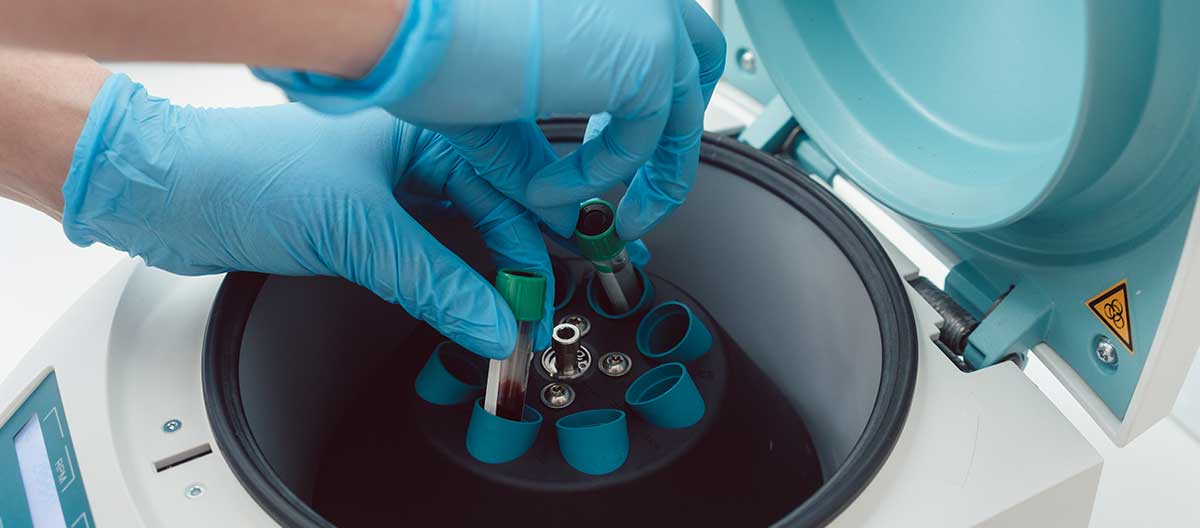
A clinical or biotech lab can have anywhere from three to thirty centrifuges in active service — benchtop, floor-standing, refrigerated, ultracentrifuges, microhematocrit, blood-tube. Most cal vendors will calibrate one. We calibrate the program.
What that actually means: RPM verification across the operating range using NIST-traceable optical and contact references, independent of the centrifuge's own display. Timer accuracy at typical operating speeds. Chamber temperature verification for refrigerated centrifuges. Per-rotor documentation when the customer needs the program documented per rotor configuration. Single consolidated certificate package per visit, formatted to satisfy CAP / CLIA accreditation review, Joint Commission MM-chapter review, and pharma USP <1058> equipment qualification documentation.
Centrifuges we routinely calibrate: Beckman Coulter Allegra and Avanti, Thermo Sorvall ST4 and Lynx, Eppendorf 5810R and 5920R, Hermle Z216M and Z383K, plus benchtop microhematocrit and clinical blood-tube centrifuges across hospital lab, pathology, and biorepository programs.
Customers we run programs for include multi-campus hospital systems and academic medical centers across Texas, clinical reference labs, biotech R&D groups, pharma QC operations, and the regional pathology and toxicology lab base.
What we calibrate beyond centrifuges
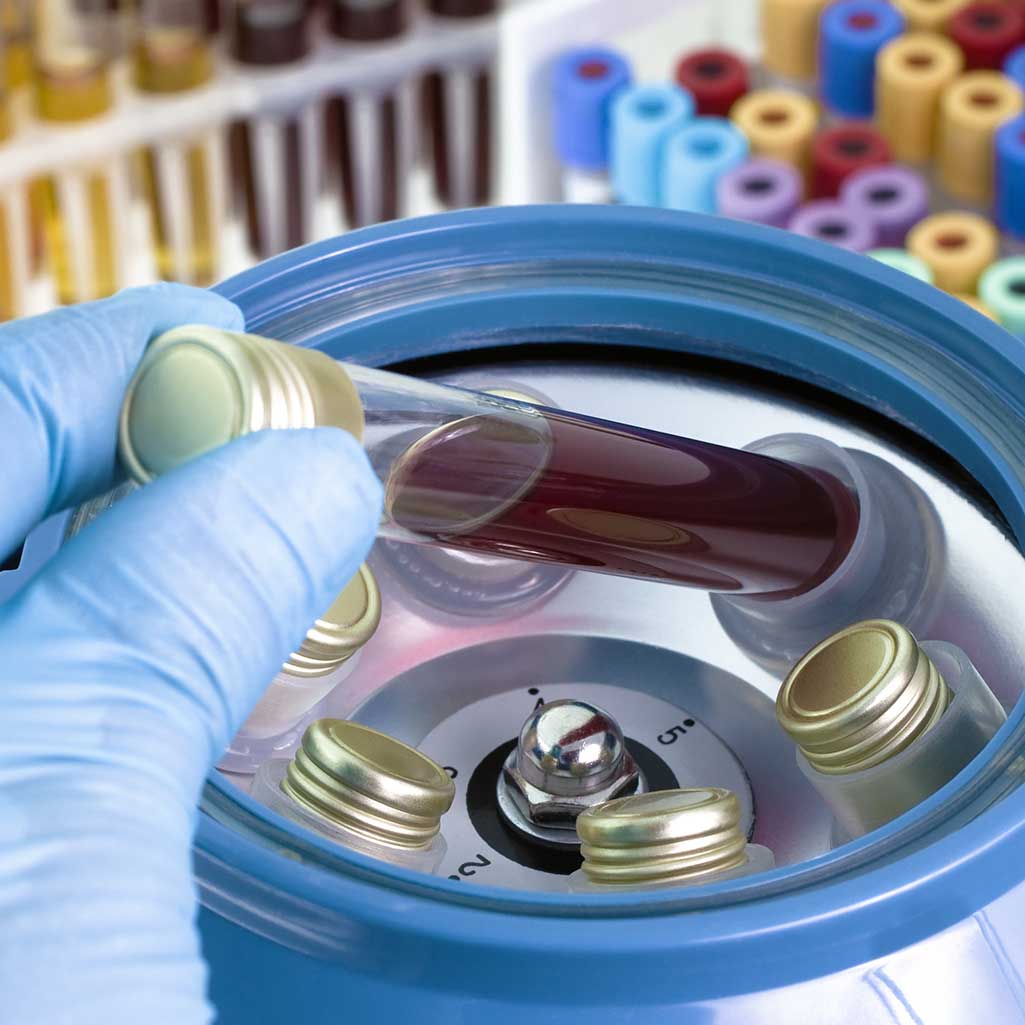
The centrifuge is the headline. The rest of the lab's mechanical inventory is where most cal programs miss things.
Mixers, shakers, vortexers, stirrers
IKA, Heidolph, Thermo Sci shakers and orbital platforms · vortexers with analog or digital RPM display (we verify actual speed against the dial — typical drift is 200-300 RPM at the high end) · magnetic stirrers, hot-plate stirrers, overhead stirrers · spinner flasks, rocker platforms, roller bottles for cell culture and blood banking · tumblers and end-over-end mixers. RPM and timer verification per OEM and customer SOP.
Mills, blenders, homogenizers
Tissue homogenizers, bead mills, ball mills for sample prep · laboratory blenders for food, pharma, and chemical sample work · cryomills with documented temperature stability where applicable. Speed and timer verification.
Specialty & clinical mechanical equipment
Shore durometers for clinical and biotech use, calibrated against NIST-traceable references · tachometers and stroboscopes for laboratory rotational equipment · vacuum centrifuges (Eppendorf 5305LP-class) with paired temperature and vacuum verification · incubator shakers coordinated with environmental chamber temperature work.
One field crew. One A2LA accreditation chain. The whole lab's mechanical inventory in one engagement.

Lab program logistics that work for multi-site customers
A hospital system with three campuses, each running 8-12 centrifuges plus mixers and shakers, doesn't need three separate quotes from three separate cal vendors. They need one program.
Onsite at active labs. 24-48 hour scheduling. Field metrologists arrive with NIST-traceable RPM references, timer references, environmental monitors, and the bench setup to clear the centrifuge fleet, the mixer/shaker bench, and the specialty equipment in a single visit cycle. Centrifuges that pass are re-stickered and back in service the same day — no waiting on remote certificate review.
Multi-campus coordination. Pickup/return logistics where shipping makes sense. A single managed program calendar across every site. Calibration-due reminders managed in IndySoft (21 CFR Part 11–compliant electronic records and signatures, validated audit trails). Consolidated certificate package per program cycle — your QA director gets one report covering every campus.
Webster, TX cal lab — for ultra-precision RPM and timer work, full overhauls, and shipped equipment. Climate-controlled bench. 5-business-day standard turnaround; expedite available for audit-deadline work.
Coordinated with the rest of your lab program. The same Allometrics field crew that calibrates your centrifuges can recertify your biosafety cabinets, certify your fume hoods, run viables testing, calibrate your pipette program, and verify your incubator and freezer temperatures — all under one accreditation chain. Replace 3-5 vendors with one accredited partner.

Where lab equipment drift goes unnoticed
Lab mechanical equipment fails quietly. The four patterns we walk into when a clinical or biotech customer switches from a generalist vendor or an in-house program that lapsed:
1. Centrifuge RPM drift no one verifies. A clinical centrifuge runs at "10,500 RPM" per the display. Nobody has independently verified the actual rotor speed in 18 months. The display reads what it always reads. The samples don't separate the way they used to. Pathology runs get re-pulled. The display was lying. The CAP inspector asks for the RPM verification cert and there isn't one.
2. Vortexer or mixer RPM that nobody documents. An assay protocol calls for "mix at 1,500 RPM for 30 seconds." The vortexer's analog dial says 1,500. The actual speed is 1,200. The assay's reproducibility quietly degrades. Months later the lab manager wonders why method validation is drifting. Nobody calibrated the vortexer.
3. Refrigerated centrifuge chamber temperature drift. A refrigerated centrifuge runs samples that are temperature-sensitive (live cells, enzymes, blood components). The chamber temp drifts 4 °C over six months. The samples come out warm enough to compromise downstream assays without anyone catching it. The RPM is fine. The timer is fine. The temperature isn't — and there's no temperature cert because the program scope didn't include it.
4. Multi-campus lab where one site's program lapses. A hospital system with three labs runs centrifuge calibration through three different vendors. One vendor's contract expires. That campus's centrifuges go six months past due before anyone notices. Joint Commission EC-chapter review finds it.
Allometrics' certificates address all four. RPM verification independent of the equipment's display, timer accuracy at operating speeds, chamber temperature where applicable, multi-campus calendar managed in IndySoft so nothing slips. Built to survive the document review, not just the visual review.
Three certification tiers — match the calibration to the audit
Traceable — NIST-traceable verification against OEM or customer tolerance. Certificate, equipment adjustment, PM check. For general lab inventory outside a strict accreditation regime.
Traceable with Data — adds full as-found / as-left data, measurement uncertainty, environmental conditions, and ANSI/NCSL Z540.3 compliance. For ISO 9001 quality programs and customer-QMS work.
Accredited (ISO/IEC 17025 / A2LA Cert 2039.01) — full accredited calibration under our published scope, measurement uncertainty per ILAC P14 / GUM, A2LA accreditation symbol on the certificate. The default for pharma / cGMP centrifuge and mixer programs and any lab equipment in a regulated workflow.
IQ/OQ/PQ documentation available for new lab equipment installs aligned to USP <1058> equipment qualification levels (EQL-1 through EQL-3) and your QMS template.
Industries we calibrate lab centrifuges and mixers for
Common questions
How do you calibrate centrifuges — RPM only, or rotor and timer too?
RPM verification across the operating range (independent of the centrifuge's own display) plus timer accuracy. For temperature-controlled centrifuges we also verify the chamber temperature. We use NIST-traceable RPM references (optical and contact) and run verification across rotor configurations when the customer needs the program documented per rotor.
Can you handle a multi-campus centrifuge program?
Yes. One quote per program, one managed calendar across every site, one consolidated certificate package per program cycle. Calibration-due reminders managed in IndySoft so nothing slips. Pickup/return logistics where shipping makes sense. We've run this play for hospital systems with multi-campus footprints across Texas.
Do you do mixers, shakers, vortexers, and homogenizers?
Yes. RPM and timer verification on all rotational and oscillating lab equipment — orbital shakers (IKA, Heidolph, Thermo Sci), vortexers, magnetic and overhead stirrers, spinner flasks, rocker platforms, roller bottles, tumblers, end-over-end mixers. Bead mills, ball mills, tissue homogenizers, lab blenders. Per OEM and customer SOP.
Can you coordinate centrifuge calibration with our biosafety cabinet recertification?
Yes — under one accreditation chain. The same Allometrics field crew that calibrates your centrifuges can recertify your biosafety cabinets per NSF/ANSI 49, certify your fume hoods per ANSI/ASHRAE 110, run viables testing, calibrate your pipette program, and verify your incubator and freezer temperatures. One visit, one report package, one accreditation chain.
What's your turnaround?
Standard cal-lab turnaround is 5 business days. Onsite scheduling typically lands within 24-48 hours of quote acceptance. Quotes turn around in 24 hours. Centrifuges that pass calibration are re-stickered and back in service the same day during onsite visits.
What if a calibration fails an audit?
We address it. Allometrics' audit-time guarantee applies to every certificate we issue, across every service. Our calibration data management runs on IndySoft (21 CFR Part 11–compliant), so the underlying records are inspector-ready.
A2LA Cert 2039.01 — laboratory mechanical scope
The full Allometrics A2LA Cert 2039.01 scope is published at a2la.org/accreditation/2039-01.
Download the full A2LA Cert 2039.01 Scope of AccreditationHow lab centrifuge and mixer work fits into our accreditation
Allometrics calibrates lab centrifuges, mixers, shakers, vortexers, mills, blenders, and homogenizers under our published A2LA Cert 2039.01 scope where it applies (rotational speed, time, temperature) and against NIST-traceable references for the underlying parameters. The certificate format includes equipment ID, serial number, manufacturer, model, customer asset tag, technician, environmental conditions, reference standards used with NIST traceability chain, as-found and as-left readings at every test point, measurement uncertainty per ILAC P14 / GUM, and pass/fail determination against your specified tolerance.
Standards: ISO/IEC 17025 · USP <1058> (analytical instrument qualification, applied to centrifuges and mixers) · CAP / CLIA documentation conventions · OEM and customer SOPs.