
ISO/IEC 17025:2017 calibration · Valid through April 30, 2027
The accredited scope is narrow. The traceable scope is wide. Here's the line.
Dimensional is the discipline where most cal labs hope you don't read the actual A2LA scope. Ours is published — and the accredited window for dimensional is tight on purpose:
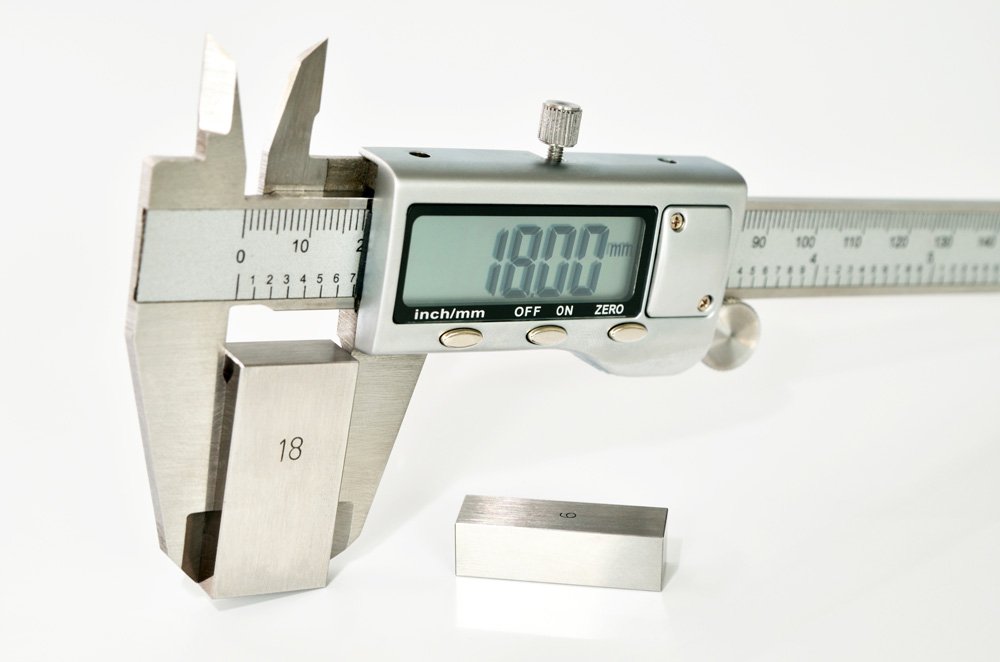
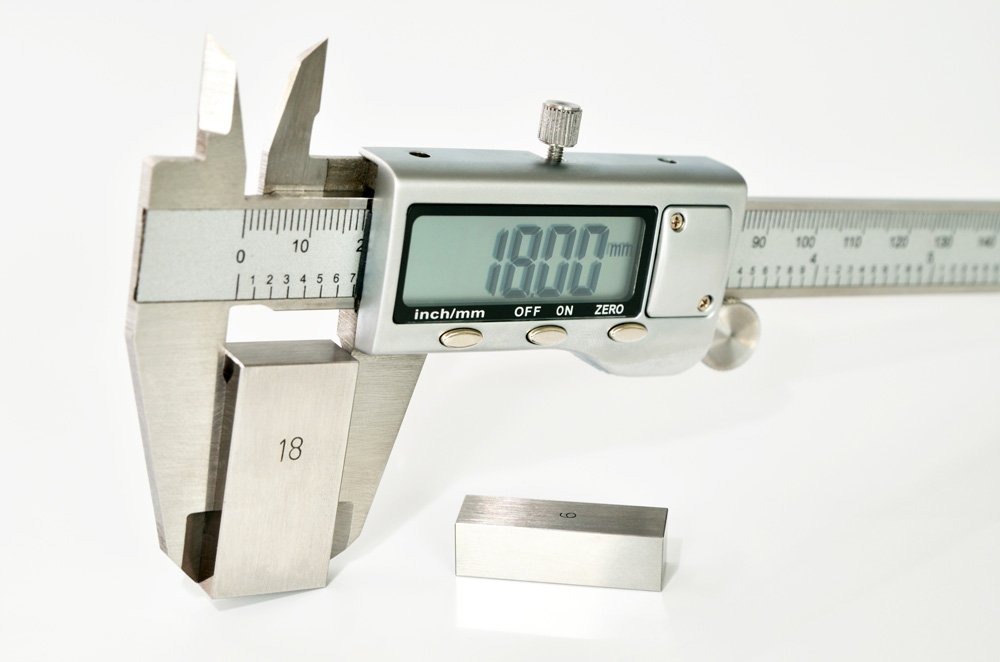
- Calipers — accredited up to 12 in
- Outside micrometers — accredited up to 3 in
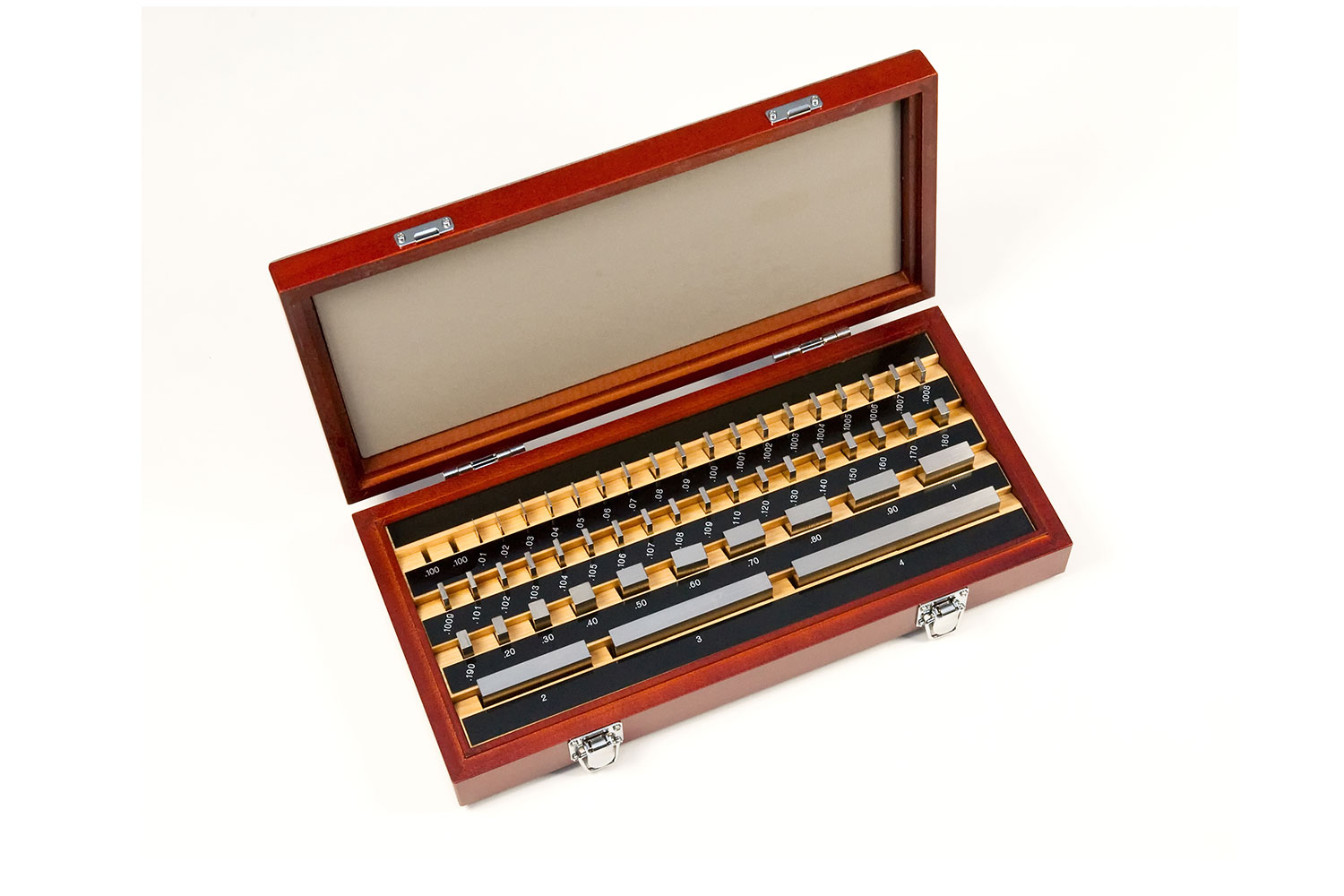
- Gauge blocks — accredited up to 4 in, against the Labmaster Universal 175 with NIST-traceable masters
Everything else we calibrate dimensionally is NIST-traceable rather than A2LA-accredited — and we tell you that on the front end of the quote, not the back end of the certificate. That includes:
- Calipers above 12 in — up to 40 in NIST traceable (we recently delivered a 40-inch caliper job for a Houston shop using extended gauge blocks)
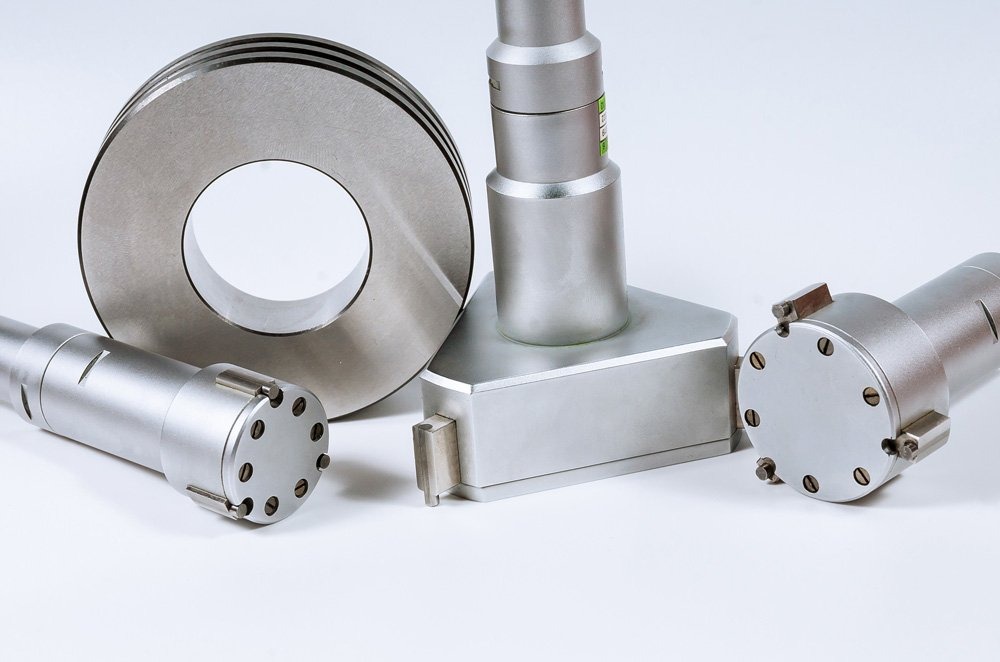
- ID and OD micrometers from 1 in to 13 in — a routine NIST-traceable workorder line for aerospace and precision-shop customers
- Pin gauges — increment sets, master pins, Class ZZ minus pins (Vermont Precision Tool, Meyer)
- Ring gauges — go/no-go, master, thread ring (the customer or we supply the setting plug + thread measuring wires)
- Dial and digital indicators — plunger, lever, depth, height
- Tape measures, scales, rules, feeler gauges, squares, protractors, stadiometers
- Surface plates — granite and steel, onsite
- Optical comparators and profile projectors — case-by-case (we handle the Mitutoyo class)
- Stage micrometers and reticles — for microscopy labs
If your QA program needs the A2LA accreditation symbol, you'll get it on what's in scope. If your QA program needs NIST traceability beyond that scope, you'll get that with documented uncertainty. You won't get an accredited symbol on a certificate it doesn't belong on.
Why the gauge block chain matters more than anything else on this page
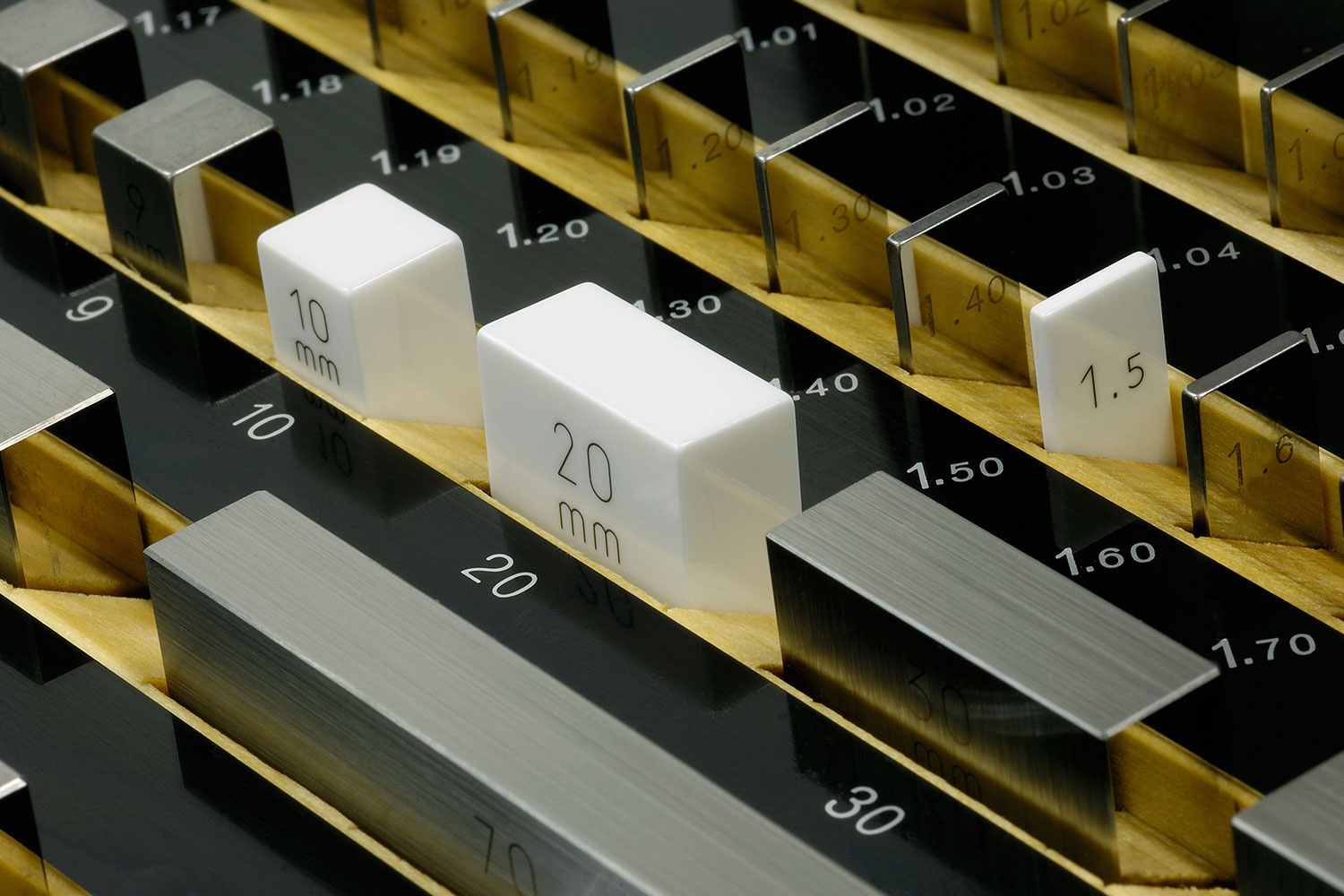
Every dimensional certificate published by Allometrics ultimately traces back to NIST-traceable gauge block masters on a Labmaster Universal 175 in our climate-controlled Mass / Dimensional lab. If the gauge block chain is wrong, every caliper, micrometer, and pin gauge that ran through this lab is wrong. So the gauge blocks get the attention.
Class 0 through Class 4 in scope. We calibrate gauge blocks up to 4 in against published CMC of 0.3L + 4.4 µin (≤1 in) and 0.7L + 4.1 µin (1 to 4 in). Customer master sets, working sets, and thin-block sets are all welcome.
Granite surface plate added in early 2026. A 2,400-pound granite plate moved into the Mass / Dimensional lab in Q1 2026 — a meaningful upgrade for surface-flatness verification work that previously had to leave Webster. The plate is now part of the dimensional bench, supporting indicator and height-gauge calibration that needs an actual flat reference, not a published one.
Soak time is part of the procedure. Anything dimensional that's traveled in changing temperature or humidity sits in the climate-controlled lab before measurement. For onsite work that uses our gauge block standards (e.g., a customer's Mic-Trac fixture), we bring the standards 24 hours in advance to soak at the customer's bench temperature.
That's the unglamorous work that makes a dimensional cert defensible in an audit. It's also the work most cal labs cut to hit a turn-time number.
What a real shop calibration list actually looks like
Dimensional rarely shows up as a clean three-piece order. Recent representative workorders that hit our bench:
- Aerospace Corp — 24 ID and OD micrometers in the 1–13 in range, plus a level, on one workorder. NIST traceable line items, shipped together, certified together.
- Exxon Beaumont — Mitutoyo 184-3075 thickness feeler gauge set (13 leaves, 0.03–0.5 mm) plus the rest of the unit's I&E gauge inventory in the same recurring service window.
- Tenaris Houston — Mitutoyo 982-551 series digital hand tachometer plus dimensional contact instruments, NIST traceable.
- TI Automotive — three digital micrometers permanently mounted on a fixture on the production line. Onsite 17025-style calibration in place; the customer can't disassemble the fixture for a ship-in cycle.
- Vermont Precision Tool customers — Class ZZ minus pin gauges (e.g., 0.105 in increment) handled in-lab.
- Cabot / Lone Star — Ring Groove Calipers 12 in (gauge block calibration), Lixer Tool A-Class Tape Measure Calibrator (caliper-traceable), thread ring gauges (with customer-supplied setting plug and thread measuring wires).
Brands we routinely calibrate: Mitutoyo, Starrett, Brown & Sharpe, Fowler, Mahr, Tesa, Webber, Pratt & Whitney, Westward, TESA, DEWALT, Lufkin, Helios, Insize, GAGEMAKER, Vermont Precision Tool, Meyer, Lixer Tools — and we calibrate all brands of calipers, micrometers, indicators, pin gauges, ring gauges, and tape measures.
When the equipment can't ship — onsite dimensional
Most dimensional work is in-lab work because dimensional measurement is sensitive to temperature, humidity, and stable bench reference. But some of it can't move:
- Granite surface plates — anchored or simply too heavy to ship. Onsite flatness verification with portable references and recorded environmental conditions.
- Fixture-mounted indicators and micrometers — production fixtures where the gauge is bolted to the assembly (the TI Automotive case above).
- Mic-Trac systems — bring our gauge block masters onsite 24 hours in advance to soak at the customer's bench temperature before a Mic-Trac calibration. The procedure is built into our quote, not improvised.
- Multi-tech crews for plant turnaround windows — we mobilize multiple technicians during a refinery turnaround to clear a unit's gauge inventory before it goes back into service.
Climate-controlled or controlled-environment-aware. For onsite dimensional where the customer's space isn't climate-controlled, we record temperature and humidity at measurement time and document the conditions on the certificate — so an auditor never has to ask whether the measurement happened at 72 °F or 92 °F.

What we route, repair, or buy a standard for
Three things most cal labs handle silently — and badly. We handle them out loud:
1. Repair, not just calibration. Micrometer repair is offered in-house — clean, anvil reset, ratchet adjustment, screw replacement when feasible. Most micrometers that need a tweak to come back into spec leave the lab calibrated rather than rejected and reshipped to the customer for warranty service. Ask up front and we'll tell you what's repairable.
2. Missing standards — we'll source or coordinate. If a thread ring gauge calibration needs a setting plug and matching thread measuring wires that the customer doesn't have, we'll either purchase the standard (with approval) or coordinate the work with a Houston-area dimensional specialty lab. Either way, you get one quote and one invoice — not a runaround.
3. Honest scope on the edge cases. Optical comparators (Mitutoyo class) and profile projectors — case-by-case, we'll quote what we can do; what we can't, we route. Surface roughness testers (e.g., Mitutoyo SJ-210 / Surftest class) — assessed per request. CMM full verification — typically routed to a CMM specialist; we calibrate the touch-probe and indicator components when applicable.
Audit-time guarantee. If a calibration we delivered is challenged in an FDA, USP, Joint Commission, CAP/CLIA, ISO 9001, or customer audit, we will address it. Calibration data managed in IndySoft — 21 CFR Part 11–compliant electronic records, validated audit trails, controlled access.
A2LA Cert 2039.01 — dimensional scope
The full A2LA scope is published at a2la.org/accreditation/2039-01.
Download the full A2LA Cert 2039.01 Scope of AccreditationView the dimensional scope (verbatim from the published cert)
| Parameter/Equipment | Range | CMC2, 6 (±) | Comments |
|---|---|---|---|
| Calipers3 | Up to 12 in | 740 µin | Gage blocks |
| Outside Micrometers3 | Up to 3 in | 72 µin | Gage blocks |
| Gage Blocks | Up to 1 in (1 to 4) in | 0.3L + 4.4 µin 0.7L + 4.1 µin | Labmaster Universal 175 w/ gage blocks |